


[ad_1]
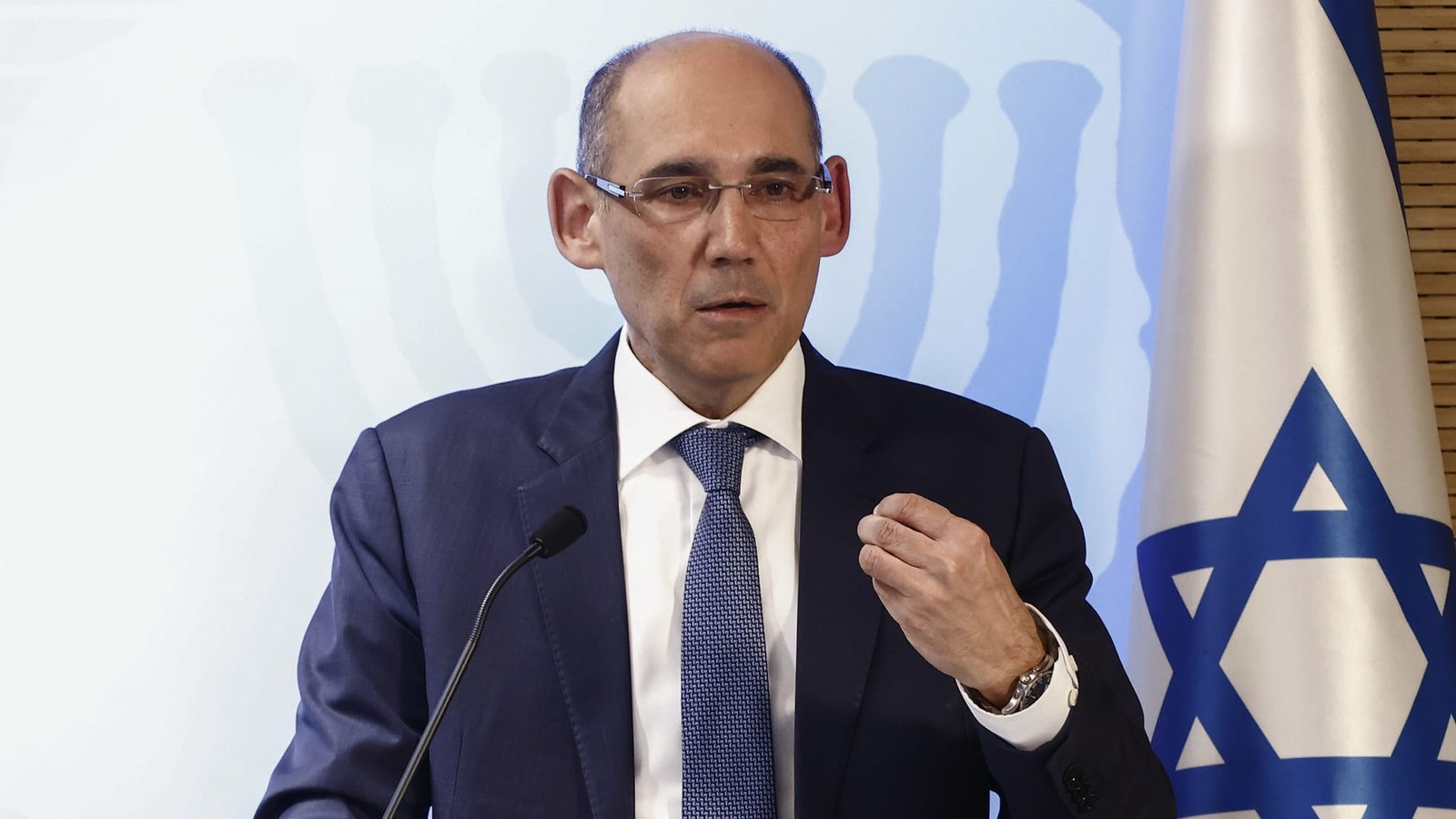
Amir Yaron, governor of the Bank of Israel, speaks during an interest rates news conference in Jerusalem, Israel, on Monday, Nov. 27, 2023.
Kobi Wolf | Bloomberg | Getty Images
The immediate ban on nearly all Palestinian workers to enter Israel following the Hamas-led terror attack of Oct. 7 has dealt a shock to the Israeli economy, the country’s central bank chief said at the World Economic Forum in Davos.
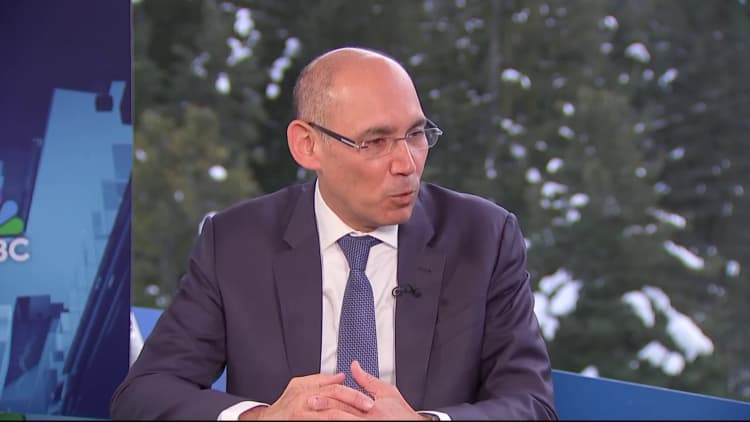
“We’re working in a very uncertain environment, as you can tell, and I would say there are two types of shocks: there is a supply shock,” Bank of Israel governor Amir Yaron told CNBC’s Dan Murphy. “And it’s primarily in the construction industry where … a third of that industry is Palestinians from the West Bank, and now they’re not coming in to work.”
“It’s also affecting agriculture, where they are in, and there are other foreign workers,” Yaron said. “So that will take a little bit, that’s a negative supply shock, and it could affect prices going up towards the second half of the year.”
He said that the bank must monitor these price developments, adding, “On the other hand, we’ve seen negative demand shock, obviously in a war. And so far that negative demand shock has been the most dominant one. And we will have to monitor that as well, as we go forward with how we are thinking about continuing with monetary policy.”
Before Oct. 7, more than 150,000 Palestinian workers from the occupied West Bank entered Israel daily for work in a range of sectors, predominantly in construction and agriculture.
The ban on most of these workers returning to their employment in Israel has dramatically hurt the economy of the West Bank. It has also contributed to anger and rising unrest over Israel’s decades-long occupation and its relentless bombardment of the Gaza Strip, which Palestinian health authorities say has killed more than 24,000 people. The Israeli offensive began after Hamas militants from Gaza launched a surprise attack on southern Israel that killed some 1,200 people and took another 240 hostage, of which 136 people remain in captivity.
In late December, Israel’s finance ministry warned that the ban on Palestinian workers could cost Israel’s economy billions of shekels per month.
“We calculated what the economic damage would be if Palestinians do not go to work…and it is estimated at approximately NIS 3 billion ($830 million) per month,” a representative of the finance ministry told Israel’s parliament, the Knesset, at the time, according to local media.
Business and factory owners in December pressured lawmakers to allow between 8,000 and 10,000 Palestinian workers to return to their jobs in Israeli settlements and businesses in the West Bank.
In comments reported by the Times of Israel, Raul Sargo, president of the Israel Builders Association, had told the Knesset: “We are in very dire straits … The industry is at a complete standstill and is only 30% productive. Fifty percent of the sites are closed and there is an impact on Israel’s economy and the housing market.”
Israel’s agriculture sector is also heavily dependent on foreign labor, in particular workers from Thailand — at least 10,000 of whom have left the country after the October attack, during which many Thai farm workers were killed and taken hostage.

Asked about what tools the bank has at its disposal to respond to a potential expansion of the war to Israel’s northern border with Lebanon, Yaron stressed the focus on preventing financial instability.
“We all hope it doesn’t happen. In case it does, then your mindset becomes financial stability,” the banker said. “That means the whole view on interest rate process … expansionary monetary policy probably stops, and you use the types of tools we’ve used so far, like the FX or things like that, and we hope we don’t need to go there.”
Yaron added that he was optimistic about his country’s ability to deal with shocks, given its familiarity with wars over the decades.
“I think we still have to remember, Israel is a dynamic economy,” he said. “It’s resilient, it has shown it can bounce back … pretty much over every military event, it has shown that it can come back and grow fast. I would say, actually, Homeland Security, economics has demand for that has grown. And hopefully, if there is a day after in which there’s a better environment with moderate states, those will bring in also new opportunities.”
[ad_2]
Source link



