



[ad_1]
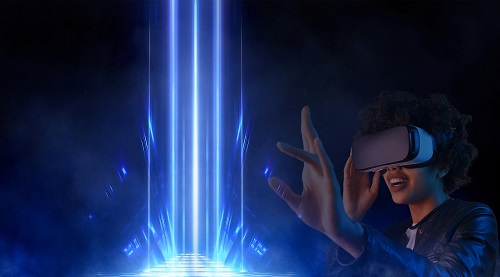
People in the crypto space are talking about the Metaverse as a revolutionary innovation that will transform the Internet as we know it. As its name suggests, Metaverse means “beyond the universe”, describing a virtual reality space where users can engage with each other in real time. For example, developers can create parks, buildings or other things that don’t actually exist.
While some perceive it as an extension of the current Internet, others see the Metaverse as an entirely new space. This concept is still in its early stages, and its exact form and use cases are still being explored.
How the Metaverse was born
The term metaverse first appeared in Neal Stephenson’s novel ‘Snow Crash’, in 1992. In the book, it referred to a virtual reality world experienced from a first-person point of view through reality goggles.
The Metaverse existed in some form before; for instance, immersive games like World of Warcraft and Second Life have fascinating 3D worlds where you can use your avatar to interact with others. These games have different themes; while the former focuses on fun, the latter focuses on the social aspect.
Social network platforms such as TikTok, YouTube and Facebook are also pieces of the Metaverse, even if they may not seem so at first glance. But Facebook itself is a mini-internet if you think about it, as its content has become image based. In the future, the platform will likely pivot even harder into the Metaverse, becoming graphically immersive.
Crypto and its connection to the Metaverse
The purpose of Metaverse is to give people the opportunity to experience an augmented reality that surpasses physical reality. But for the Metaverse to function correctly, it requires the immutability of the blockchain. Since hacks are a significant issue in the virtual environment, people need to operate on a secure platform.
Fortunately, that can be achieved through blockchain, which enables fast confirmation of information and ensures secure transactions. Thus, blockchain and crypto assets are vital components of virtual reality. Both individuals and institutions can perform online transactions and check the current bitcoin price – all in real-time – by using an exchange like Binance.
The trend towards online payments has been growing in recent years, along with the widespread adoption of e-commerce and the rising popularity of digital platforms. The COVID-19 pandemic has also accelerated this trend, as more people have turned to online shopping and digital payments due to lockdowns.
Blockchain technology and crypto provide an additional layer of transparency to online transactions, and the increasing adoption of crypto payments by major payment processors like PayPal and Mastercard is a sign of the rising mainstream acceptance of these technologies. This trend will likely keep evolving in the future, and the Metaverse will become an environment where engagement and transactions occur in real time.
Understanding how the Metaverse works
The Metaverse can be grouped into two different categories of platforms.
The first category involves using blockchain technology – specifically cryptos and NFTs- to create decentralized virtual worlds. These platforms, such as The Sandbox, and Decentraland, enable users to buy virtual land and develop their own digital assets and use them to create unique virtual experiences.
The second category of Metaverse platforms focuses on offering users a virtual space where they can meet and interact with each other, and engage in different activities, like socializing, entertainment, and business. These platforms are more centralized and backed by large organizations.
Both categories of platforms involve unique features and use cases, sharing a common goal of providing users with a virtual space where they can interact with each other and with digital objects in a seamless and immersive way.
On the Metaverse, you can do different things virtually, such as taking a trip, purchasing clothes and even going to a concert.
The Metaverse can be a game-changer for remote collaboration, as platforms like Horizon Workrooms from Facebook enable users to meet in a virtual environment, which offers a more interactive experience than traditional video conferencing. It allows for different forms of communication, like video calls and virtual whiteboarding, enabling users to join as avatars or use their own devices.
But a condition must be met for virtual meeting spaces to become widespread: tech companies must agree on a set of standards to ensure compatibility across various platforms, thus preventing users from switching between different virtual environments.
Core features of the Metaverse
The most common ideas surrounding the Metaverse are derived from science fiction. In this context, it is envisioned as a ‘jacked-in’ internet – a manifestation of reality which is grounded in a theme-park-like world. The core features of the Metaverse are the following:
Immersiveness – which means providing a highly immersive and interactive experience, enabling users to feel like they are physically present in a virtual world.
Interoperability – this attribute translates into bringing different virtual worlds, platforms and applications together to enable users to move seamlessly between them.
Scalability – which refers to handling a great number of users and multiple use cases, including education, commerce and gaming.
Persistence – the Metaverse is a persistent environment, which means that the changes users make are permanent, and others can also experience them in the future.
User-generated content – the Metaverse allows users to create, modify, and share their own content, like virtual objects, environments and avatars.
Social – this is an essential attribute of the Metaverse, enabling users to interact and communicate with each other in real time.
Open Standards – the Metaverse is built on open standards, allowing for interoperability and easy integration with other platforms and services.
The future of the Metaverse
Creating a true metaverse that perfectly mirrors real life is a complex task that may require some time to be completed.
However, many businesses in the industry are working on developing virtual and augmented reality technology to make the metaverse experience more immersive and realistic. According to PwC- a global accounting and advising company, VR and AR could impact the global economy significantly, reaching $1.5 trillion by 2030. This drives companies like Google, Microsoft and Facebook to invest in cloud computing.
The Metaverse is expected to become a new platform for innovation and growth, and many companies are seeking to take advantage of opportunities in areas like subscriptions, payments and advertising, the same way they did with the Internet. Plus, there may be greater integration of the Metaverse with other technologies like AI and blockchain, enabling new forms of communication and commerce.
As more people spend time online and technology keeps evolving, the Metaverse is likely to become a significant part of people’s lives.
[ad_2]
Source link



